
Written by: Catechist Branislav Ilić
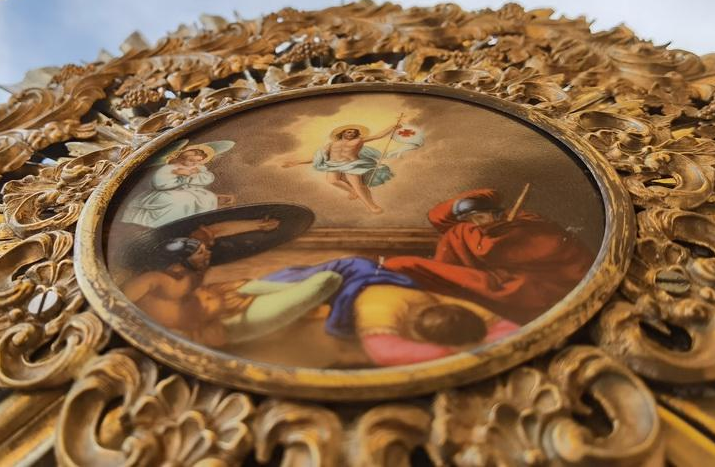
The event of the Resurrection of Christ is the central event in the entire history of the human race and the economy of our salvation. It is the foundation, cornerstone and goal of both our faith in God and our salvation. For if the dead are not raised… then our preaching is in vain and your faith is in vain, says the Holy Apostle Paul (cf. 1 Cor 15:13-14). We all know that the Lord’s disciples fled and abandoned Christ when He was crucified on the cross and died. They were, in fact, waiting for a Saviour who is immortal and who would also free them from death. The words of the Apostle: But we had hoped that He was the Saviour of Israel (Lk 24:21) clearly confirm this. However, Christ died and after three days He rose again. After the Resurrection of Christ, when He appeared alive to the apostles and those who were with them, they all gathered around Him again and testified that He had died and risen and that He was truly the Saviour of the world. They confirmed this testimony by giving their lives for Christ.
If you descended into the tomb, Immortal One,
but you destroyed the power of hell
and rose victorious, Christ God,
saying to the myrrh-bearing women: Rejoice!
and granting peace to Your apostles,
You who grant the Resurrection to fallen mortals! (Kontakion of Easter)
Let us sing this song of immortality without ceasing in these days in which we celebrate the Resurrection of Christ, which took place, as the ancient seers of God testify, on the very day on which God in the beginning, out of nothing, created heaven and earth. On the same day, according to the same mystics, the Lord delivered His chosen people from Egyptian slavery; that is why it is called Passover – that is, the passage from slavery to freedom in the Lord through the Red Sea. The fullness of God’s presence in His creation is revealed precisely in the mystery of Christ’s Resurrection, which is why we sing to Him: In the tomb bodily, in hell with the soul as God, in paradise with the thief, and on the Throne You were, O Christ, with the Father and the Spirit, filling all things, the Infinite. It is obvious that the Resurrection of Christ appears and shows itself not only as a victory over death and transience, but also as a revelation of the fullness of the Divine Providence regarding the world and man.
The Feast of Feasts has forty days of afterfeast. This sacred period from Easter to the Ascension represents the most solemn period during the liturgical year. In one of our previous works, we wrote about the Bright (Paschal) Week, which in the liturgical sense is understood as one continuous day of the Resurrection, as the 66th canon of the Sixth Ecumenical Council reminds us of, which states: “From the day of the Holy Resurrection of Christ our God until New Week, the faithful should spend it in zeal, rejoicing in psalms, hymns and spiritual songs, listening to the teachings of the Divine Scripture and participating in the Holy Eucharist.”
After the Bright (Paschal) Week, on the first Sunday after Easter, we celebrate the event of the conviction of the Holy, glorious and all-praised Apostle Thomas, and for this reason we also call this Sunday the Sunday of Antipascha, the Sunday of Renewal or the New Week. On this eighth day after the Resurrection of our Lord Jesus Christ, we remember the appearance of the Risen Lord to His disciples gathered together. After the appearance of the Risen Christ, the holy Apostle Thomas, being filled with momentary and temporary unbelief, wanted to sensually touch the Saviour’s wounds and be convinced that the Risen Lord had truly risen. The Lord removed the temporary unbelief of the Apostle Thomas by entering through a closed door into the room where the assembled apostles were gathered for prayer, telling the Apostle Thomas to touch His wounds. After that, the Apostle Thomas exclaimed: My Lord and my God! In this festive event, the holy Apostle Thomas symbolizes each of us, representing our fallen and doubtful nature. The unbelief of the Apostle Thomas was a gradual path to conviction, and therefore the Apostle Thomas is no longer the unbelieving Thomas, but the convinced Apostle Thomas and a faithful witness of the Risen Lord.
On the third Sunday after Easter, we celebrate the liturgical commemoration of the Holy Myrrh-bearing Women, as well as the Holy and Righteous Joseph and Nicodemus. The Church liturgically celebrates all the “secondary” figures, those people who laid Jesus in the tomb, so that we can admire their courage. This is the courage of those who work far from the eyes of the world and who are unknown to the public. This week’s liturgy focuses special attention on the myrrh-bearing women, emphasizing their faith and love, but especially the courage they had. Although, in the words of the Holy Apostle Paul, they were “weaker vessels,” the myrrh-bearing women were persistent and completely faithful, and for this reason the Risen Lord honoured them to be the first to receive and proclaim the good news of the Resurrection. After the Most Holy Theotokos, in the Christian tradition, the myrrh-bearing women have become a model for every Orthodox Christian woman because with their lives they witness to evangelical active love, but also firm faith in the most difficult moments when the Saviour offered himself for sacrifice and when the apostles fled in fear, they remained faithful to the Lord.
On the fourth Sunday after the Feast of Feasts, the Church commemorates one of Christ’s deeds in a liturgical service, the healing of the paralyzed man at the pool of Bethesda. The paralyzed man whom the Saviour heals had been lying in the entrance to this pool for 38 years, because he had no one to lower him into the pool when the water was stirred up. The pool of Bethesda symbolizes this world and human sinful nature and the self-love and selfishness of people. The paralyzed man felt the sinful egoism of people on himself, because he cries out to Christ: Lord, I have no one! For this man, the most painful thing is not his illness with which he struggles, but loneliness and abandonment by people. The healing of the weakened man also reflects the life of those who truly believe in the Resurrection and live by the resurrection, as the second stichera on the Lord’s Prayer this week reminds us of: „The Lord, wanting to resurrect fallen people, as a man, went around the earth healing the diseases of all.“ The Lord heals the weakened man not by some power, but by deeply respecting his God-given free will, which is why He asks him the question: Do you want to be healthy? This is the fruit of the encounter and cooperation between the Divine power on the one hand, and the man’s faith and desire for healing on the other. This Gospel narration also applies to each of us, because being filled with sin that makes us sick, we are weakened in both spirit and body, while we always find our healing anew precisely in the Holy Liturgy, and in communion with God, all the saints and our neighbours.
The fourth Wednesday after the feast of Holy Easter is liturgically glorified as the Half-Wednesday of Pentecost. This feast marks the middle between Easter and the feast of Pentecost. It unites the celebration of the Resurrection of our Lord Jesus Christ and the feast of Holy Pentecost, which is coming soon. The Church has wisely established the feast of the Half-Wednesday of Pentecost, which unites Easter and Pentecost and is therefore celebrated exactly halfway, or in the middle between the Feast of Feasts and Holy Pentecost. In one of the stichera of this feast we sing: “Since the half of the feast of Your Resurrection, O Christ, and the divine coming of Your Holy Spirit has come, let us gather together and sing the mysteries of Your miracles.” The meaning of the feast of the middle, or Half-Wednesday of Pentecost, is to emphasize the connection between the Father, the Son, and the Holy Spirit. On Wednesday of the fourth week after Easter (exactly between the Feast of Feasts and Holy Pentecost), we celebrate Christ the Mediator. He was sent by the Heavenly Father, and He gives the apostles the promise of the descent of the Holy Spirit. In the Gospel passage that we read on the feast of the Half-Day Pentecost, the Evangelist John reminds us that in the middle of the Feast of Tabernacles, the Saviour entered the temple to teach. We know that the Jews celebrated the Feast of Tabernacles as Sukkot, but that it also consisted of blessing the fruits and giving thanks to God who delivered them. On the other hand, the Evangelist reminds us that on the eighth day after the feast, the Lord cried out: “Let anyone who is thirsty come to me and drink.” For, as the Evangelist John testifies: “Out of his belly will flow rivers of living water” (John 7:37-38). This Living Water, which the Evangelist speaks of, symbolizes the sign of the Holy Pentecost. Now we live in anticipation of the Holy Spirit, and our thirst for God deepens our feelings and encourages us to receive God’s gift.
On the fifth Sunday after Easter, and in the celebration of the Feast of the Half-Day Pentecost, the Church celebrates the event of the encounter of the Lord Christ with the Samaritan woman at Jacob’s well. Christ, the knower of the hearts of all and everything, asks the Samaritan woman for water to drink. The thirst that we observe in the Gospel represents the weakness of a complete and true man, it represents the weakness of each of us. According to the words of the Venerable Justin of Ćelije, the Lord Jesus uses this weakness of His human nature as a means of salvation for the Samaritan woman: He speaks to her about living water, from which she will never thirst. The Saviour here calls the grace of the Holy Spirit the living water, and whoever is worthy of it will have within himself a constant source of divine teachings. Whoever drinks from this living water, that is, whoever is nourished by the grace of the Holy Spirit, will never be spiritually thirsty. The Samaritan woman, having received from Christ the water of eternal life, filled herself with truth, and the pinnacle of her faith and sacrifice was her martyrdom. The holy martyr Photina (the Samaritan woman), who was first illuminated by the light of truth at the well, was thrown into the well, where she was martyred and was crowned by the Lord with an unfading crown of martyrdom. In the calendar, we celebrate her memory on March 2/20.On the sixth Sunday after Easter, we commemorate the healing of the man born blind in a liturgical service. This miracle of Christ is described in the Gospel of John. Jesus Christ completely healed the man born blind, thus showing and confirming His glory. The Lord did not only restore his physical sight, He did not heal just one diseased organ, but raised completely atrophied eyes from the nothingness of blindness. The Lord gives light to a man who from birth knew nothing but darkness. The Son of God takes mud and mixes it with His saliva, thereby repeating and renewing the act of creation, as described in the Old Testament: “The Lord God formed man from the dust of the ground” (Genesis 2:7). Jesus sends the blind man to the bathhouse to wash himself and completes His work of salvation, instructing the man to undergo a rite of purification. The apostles asked their Teacher: “Lord, who sinned, this man or his parents, that he was born blind?” Our Lord answers his disciples’ question: „Neither did he sin, nor his parents, but that the works of God might be made manifest in him.“ In the depths of God’s providence, it was determined that the works of God would be manifested in this man born blind, but also the glory of God, which the Lord would most perfectly reveal and show during His Ascension into heaven.
This event of the healing of the man born blind is celebrated for three days, until the feast of the Ascension of the Lord, which we celebrate on Thursday of this sixth week after Easter. The day before the feast of the Ascension, the Easter devotions are completed in a liturgical manner, when the prayer period of the most joyful period of glorification of the Feast of Feasts – the Resurrection of Christ, in which the mystery of our salvation and all life is revealed, is concluded.